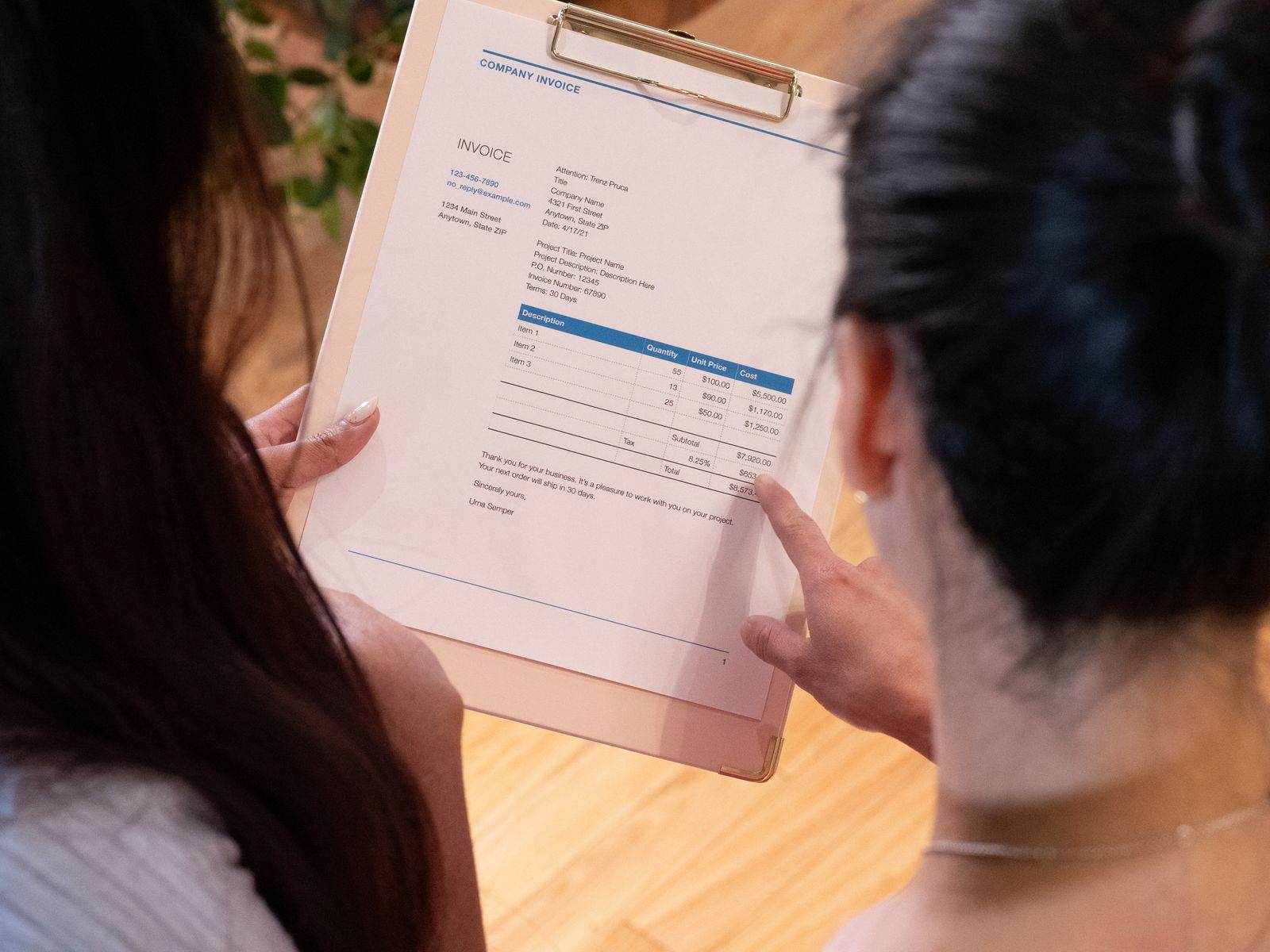
UAE eInvoicing has moved from announcement to something you can actually join. The pilot and voluntary phase opened on 1 July 2026, the Ministry of Finance has published Version 1.1 of the UAE Electronic Invoicing Guidelines dated 1 June 2026, and every mandatory deadline now has a date attached to it. The part most business owners underestimate is that this is not a filing change or a storage change. It changes how your invoices are created and transmitted, which usually means changing your accounting software and your process.
Does a PDF or emailed invoice count as an eInvoice?
No, and this is the single most common misunderstanding. The Ministry of Finance guidelines state plainly that unstructured invoice formats such as PDF, Word documents, images, scanned copies and emails are not eInvoices. An eInvoice is a structured electronic file, issued and exchanged between supplier and buyer in a prescribed XML format, and reported to the Federal Tax Authority.
If your current process is to generate an invoice in Excel or your accounting package, export it as a PDF and email it to the client, none of that will satisfy the requirement when your phase becomes mandatory. The invoice has to leave your system as structured data and travel through an Accredited Service Provider.
How does the UAE eInvoicing system actually work?
The UAE uses a five corner model, formally the Decentralised Continuous Transaction Control and Exchange model. Your invoice data goes from you to your Accredited Service Provider, who validates it and converts it to the standard XML specification. It then travels to the buyer's Accredited Service Provider, on to the buyer, and is reported to the Federal Tax Authority in the same flow.
- Corner 1 is you, the supplier, issuing the invoice from your system.
- Corner 2 is your Accredited Service Provider, validating and converting the data.
- Corner 3 is the buyer's Accredited Service Provider.
- Corner 4 is the buyer, receiving a structured invoice.
- Corner 5 is the Federal Tax Authority, receiving the reported data.
The practical consequence is that appointing an Accredited Service Provider is not optional paperwork. It is the mechanism. Without one you cannot issue a compliant eInvoice at all, which is why the appointment deadlines land months before the go live dates.
When does eInvoicing become mandatory for your business?
| Who it applies to | Appoint an Accredited Service Provider by | Must issue eInvoices from |
|---|---|---|
| Businesses with annual revenue of AED 50 million or more | 30 October 2026, extended from 31 July 2026 | 1 January 2027 |
| Businesses with annual revenue below AED 50 million | 31 March 2027 | 1 July 2027 |
| Government entities | 31 March 2027 | 1 October 2027 |
| Any business onboarding voluntarily | Open since 1 July 2026 | Whenever you are ready, with no penalty exposure while voluntary |
Was the 31 July 2026 deadline extended?
Yes. A lot of guidance still circulating online says businesses above AED 50 million must appoint an Accredited Service Provider by 31 July 2026. That deadline was extended to 30 October 2026. If you read an article dated before May 2026, or one that was never updated, you may think you are days away from a deadline that is actually three months out.
Not sure which phase your business falls into?
Talk to a consultantWhat are the penalties for eInvoicing non compliance?
Cabinet Decision No. 106 of 2025, published in the Official Gazette on 24 November 2025, sets out the penalty regime. The amounts are modest per event but they accrue monthly or daily, so a business that drifts for a year is not looking at a small number.
| Violation | Penalty |
|---|---|
| Failing to appoint an Accredited Service Provider by your deadline | AED 5,000 for each month or part of a month of delay |
| Failing to issue or transmit an eInvoice within the required time | AED 100 per invoice, capped at AED 5,000 per calendar month |
| Failing to notify the authorities of a system failure | AED 1,000 for each day of delay or part thereof |
| Failing to notify your provider of changes to registered data | AED 1,000 for each day of delay or part thereof |
Should you onboard voluntarily now?
For most SMEs the honest answer is that you do not need to onboard this month, but you should not wait until your deadline either. The work is rarely the invoice itself. It is the data behind it. Structured invoicing fails when trade licence details, tax registration numbers, customer records or item descriptions are inconsistent, and those problems take weeks to clean up.
- If you are above AED 50 million, the project is live now. Provider selection should be finished well before 30 October 2026 so that onboarding and testing fit before January.
- If you are below AED 50 million, use the second half of 2026 to check whether your accounting software supports UAE eInvoicing, and budget for a change if it does not.
- If you invoice government entities, plan around their October 2027 go live as well as your own.
- If you are setting up a new company now, choose accounting software that already supports the UAE format rather than migrating twice.
What to do this quarter
- Work out which phase you are in by checking your annual revenue against the AED 50 million threshold, and note both your appointment deadline and your go live date.
- Ask your accounting software vendor, in writing, whether they support UAE eInvoicing and whether they integrate with an Accredited Service Provider.
- Shortlist Accredited Service Providers from the Ministry of Finance list and start commercial discussions. Do not leave contracting to the final weeks.
- Audit your master data now: trade licence details, tax registration numbers, customer records and item descriptions. This is where most eInvoicing projects stall.
- Consider onboarding voluntarily so your first structured invoices are issued while penalties do not yet apply to you.
Want help getting your invoicing and compliance ready before the mandate?
See our PRO services